Decision comparison
Vector vs Splunk
Vector and Splunk serve fundamentally different roles in the observability stack. Vector is a high-performance data pipeline tool that collects, transforms, and routes observability data between systems, while Splunk is a comprehensive analytics platform that ingests, indexes, searches, and visualizes machine data at enterprise scale. Teams needing a lightweight, vendor-neutral data router should choose Vector. Organizations requiring full-stack analytics, SIEM, and AI-powered observability should choose Splunk. In many architectures, Vector and Splunk work together, with Vector serving as an efficient data collection and preprocessing layer that feeds into Splunk.
Used together. These are normally used together rather than chosen between. The comparison explains what each one does in the stack.
These are different kinds of product — Telemetry Pipeline and Log Management.
Quick Comparison
| Decision factor | Vector | Splunk |
|---|---|---|
| Best For | Lightweight, high-performance observability data routing and transformation for teams that need vendor-neutral log and metric pipelines | Enterprise-grade security analytics, full-stack observability, and SIEM with AI-powered threat detection and compliance monitoring |
| Architecture | Single Rust binary with no dependencies, deployable as daemon, sidecar, or aggregator with YAML/TOML/JSON configuration | Full platform with indexers, search heads, forwarders, and cloud SaaS option; includes SmartStore for tiered data management |
| Pricing Model | Contact for pricing | Splunk Free is a perpetual no-cost licence for a single self-hosted instance, capped at 500 MB of daily indexing and without alerting. Splunk Enterprise and Splunk Cloud use workload, ingest, or entity-based pricing that Splunk does not publish. |
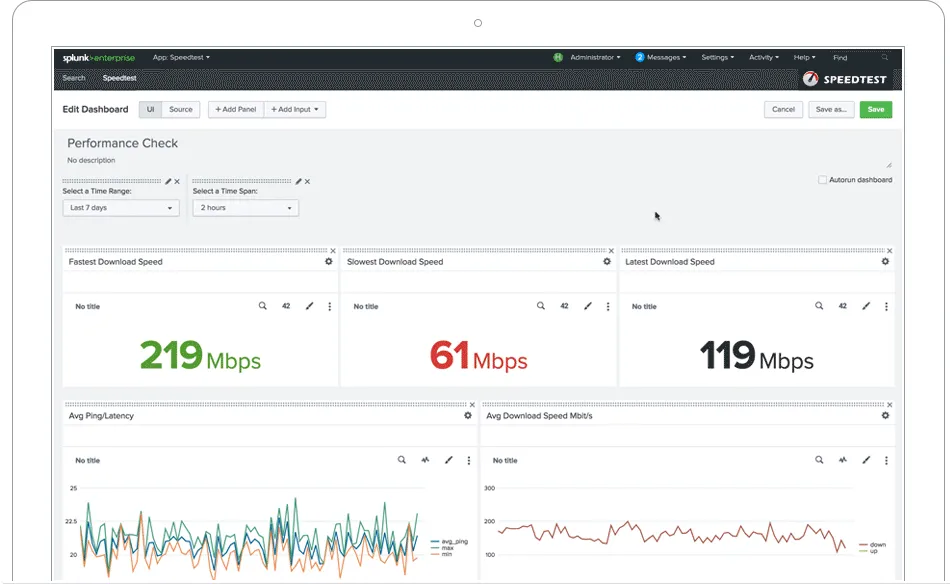
| Ease of Use | Simple composable configuration files with VRL scripting language; single-command installation but requires pipeline design knowledge | Rich web UI with dashboards and SPL query language; steep learning curve noted by reviewers but powerful once mastered |
| Scalability | Handles demanding workloads with minimal memory footprint; scales horizontally through distributed and centralized deployment topologies | Enterprise-proven at massive scale with SmartStore architecture, workload management, and independent compute/storage scaling |
| Community/Support | Strong open-source community with 13K+ GitHub stars, 300+ contributors, and 30M+ downloads across 40 countries | Mature ecosystem with 8.6/10 rating from 542 reviews, 2,000+ integrations on Splunkbase, and dedicated professional services |
Vector
- Best For:
- Lightweight, high-performance observability data routing and transformation for teams that need vendor-neutral log and metric pipelines
- Architecture:
- Single Rust binary with no dependencies, deployable as daemon, sidecar, or aggregator with YAML/TOML/JSON configuration
- Pricing Model:
- Contact for pricing
- Ease of Use:
- Simple composable configuration files with VRL scripting language; single-command installation but requires pipeline design knowledge
- Scalability:
- Handles demanding workloads with minimal memory footprint; scales horizontally through distributed and centralized deployment topologies
- Community/Support:
- Strong open-source community with 13K+ GitHub stars, 300+ contributors, and 30M+ downloads across 40 countries
Splunk
- Best For:
- Enterprise-grade security analytics, full-stack observability, and SIEM with AI-powered threat detection and compliance monitoring
- Architecture:
- Full platform with indexers, search heads, forwarders, and cloud SaaS option; includes SmartStore for tiered data management
- Pricing Model:
- Splunk Free is a perpetual no-cost licence for a single self-hosted instance, capped at 500 MB of daily indexing and without alerting. Splunk Enterprise and Splunk Cloud use workload, ingest, or entity-based pricing that Splunk does not publish.
- Ease of Use:
- Rich web UI with dashboards and SPL query language; steep learning curve noted by reviewers but powerful once mastered
- Scalability:
- Enterprise-proven at massive scale with SmartStore architecture, workload management, and independent compute/storage scaling
- Community/Support:
- Mature ecosystem with 8.6/10 rating from 542 reviews, 2,000+ integrations on Splunkbase, and dedicated professional services
Public signals
Verified factual signals only. Bars appear only for like-for-like metrics with five weekly assessments for every tool; missing evidence stays explicit. These signals do not establish enterprise adoption, product quality, or total cost.
| Metric | Vector | Splunk |
|---|---|---|
| Docker Hub pulls(Product adoption) | 4.1B | 93.2M |
| GitHub commits, 90d(Developer adoption) | 390 | 13 |
| GitHub stars(Developer adoption) | 22,000+ | 741 |
| Search interest(Market interest) | Unavailable | 15 |
| Hacker News mentions, 90d(Community interest) | 0 | 2 |
| npm weekly downloads(Developer adoption) | Not available | 34.0k |
| Product Hunt comments(Community interest) | Not available | 0 |
| Product Hunt reviews(Community interest) | Not available | 0 |
| Product Hunt votes(Community interest) | Not available | 67 |
| PyPI weekly downloads(Developer adoption) | Not available | 285.4k |
| Stack Overflow questions(Community interest) | Not available | 2.3k |
As of September 14, 2026 — updated weekly.
Health & risk evidence
Observed public-source checks for mapped package versions and repositories.
Vector
Package vulnerabilities
Not available
Repository security score
Not available
Splunk
September 14, 2026Package vulnerabilities
npm · splunk-logging@0.11.1 · PyPI · splunk-sdk@3.0.1
0 vulnerabilities
across 2 packages
Repository security score
github.com/splunk/splunk-sdk-python
6.9/10
Interface Preview
Vector
Splunk
Feature Comparison
| Feature | Vector | Splunk |
|---|---|---|
| Data Collection & Ingestion | ||
| Source Connectors | 47 built-in sources including AWS services, Kafka, Kubernetes, Docker, Datadog Agent, and Splunk HEC | 2,000+ integrations via Splunkbase with Universal Forwarders, Heavy Forwarders, and OpenTelemetry support |
| Data Formats | Handles logs and metrics natively with automatic parsing for JSON, syslog, and other structured formats | Indexes virtually any machine-generated data including logs, metrics, traces, events, and unstructured text |
| Deployment Modes | Runs as daemon on hosts, sidecar alongside containers, or centralized aggregator for fleet-wide collection | Distributed architecture with Universal Forwarders for collection, indexers for storage, and search heads for queries |
| Data Transformation & Processing | ||
| Transform Language | Vector Remap Language (VRL) provides type-safe, purpose-built scripting for parsing, filtering, and enriching data | SPL (Search Processing Language) offers powerful querying, statistical analysis, and real-time data correlation |
| Filtering & Routing | 17 transform types including remap, filter, deduplicate, aggregate, and route with conditional logic | Index-time and search-time field extraction with event routing, data masking, and real-time alerting rules |
| Data Redaction | Built-in VRL functions for redacting sensitive data like social security numbers before forwarding to destinations | Field masking and data anonymization available through configuration and Splunk apps for compliance requirements |
| Output & Destinations | ||
| Sink Connectors | 61 sink destinations including AWS S3, Elasticsearch, Datadog, Kafka, and cloud storage providers | Outputs to Splunk indexes, HTTP Event Collector, and third-party tools through apps and ODBC integrations |
| Vendor Neutrality | Fully vendor-neutral design routes data to any platform without lock-in; supports migrating between vendors easily | Primarily routes data into Splunk ecosystem; external forwarding possible but platform encourages Splunk-centric workflows |
| Multi-Destination Routing | Natively sends the same data stream to multiple destinations simultaneously with per-sink configuration | Supports output to multiple indexes and forwarding targets; Heavy Forwarders enable conditional routing |
| Analytics & Visualization | ||
| Search & Query | No built-in search or analytics interface; designed as a pipeline tool that feeds data to analytics platforms | Full-featured search engine with SPL, real-time dashboards, ad-hoc queries, and scheduled report generation |
| Dashboards | No native dashboarding capability; relies on downstream tools like Grafana or Datadog for visualization | Rich Dashboard Studio with custom visualizations, mobile support, AR experiences, and Splunk TV displays |
| Machine Learning | No built-in ML capabilities; focused purely on data pipeline operations and transformation | Machine Learning Toolkit with anomaly detection, predictive analytics, clustering, and custom model development |
| Security & Compliance | ||
| SIEM Capabilities | Not a SIEM tool; can feed security data to dedicated SIEM platforms through its pipeline architecture | Industry-leading SIEM with Enterprise Security add-on, threat detection, investigation, and automated response |
| Compliance Monitoring | Supports compliance through data redaction and routing controls but offers no compliance dashboards or reports | Automated compliance monitoring for PCI, HIPAA, GDPR with audit-ready reporting and real-time visibility |
| Threat Intelligence | No native threat intelligence; designed to transport security data rather than analyze it for threats | Built-in threat intelligence, behavioral analytics, risk scoring, and AI-driven incident detection and response |
Data Collection & Ingestion
Source Connectors
Data Formats
Deployment Modes
Data Transformation & Processing
Transform Language
Filtering & Routing
Data Redaction
Output & Destinations
Sink Connectors
Vendor Neutrality
Multi-Destination Routing
Analytics & Visualization
Search & Query
Dashboards
Machine Learning
Security & Compliance
SIEM Capabilities
Compliance Monitoring
Threat Intelligence
How they fit together
Vector and Splunk serve fundamentally different roles in the observability stack. Vector is a high-performance data pipeline tool that collects, transforms, and routes observability data between systems, while Splunk is a comprehensive analytics platform that ingests, indexes, searches, and visualizes machine data at enterprise scale. Teams needing a lightweight, vendor-neutral data router should choose Vector. Organizations requiring full-stack analytics, SIEM, and AI-powered observability should choose Splunk. In many architectures, Vector and Splunk work together, with Vector serving as an efficient data collection and preprocessing layer that feeds into Splunk.
What each one handles
Use Vector for:
Choose Vector when your primary need is a fast, reliable, and vendor-neutral pipeline for collecting, transforming, and routing observability data between systems. Vector excels in architectures where you need to send the same data to multiple destinations, migrate between analytics platforms without disruption, or preprocess logs and metrics before they reach your analytics tools. Its Rust-based architecture delivers exceptional performance with minimal resource consumption, making it ideal for high-throughput environments where every megabyte of memory matters. The open-source model with zero licensing costs makes it particularly attractive for organizations running large fleets of servers or containers where per-node licensing fees from commercial tools would be prohibitive.
Use Splunk for:
Choose Splunk when your organization needs a complete observability and security analytics platform with enterprise-grade capabilities including SIEM, dashboarding, machine learning, and AI-powered threat detection. Splunk is the right choice when you need to search, analyze, and correlate machine data across your entire infrastructure, generate compliance reports, or build custom dashboards that provide real-time operational visibility. Its mature ecosystem of 2,000+ integrations, proven track record with enterprises protecting a current vendor-published rateB+ in market capitalization, and comprehensive professional services make it the stronger option for organizations that need a single platform to handle security operations, IT monitoring, and business analytics at scale.
These roles reflect the available product evidence. Most teams run both; which one owns a given job depends on your stack and team.
Frequently Asked Questions
Can Vector and Splunk be used together in the same observability stack?
Yes, Vector and Splunk complement each other well and many organizations deploy them together. Vector can serve as a lightweight collection agent running on hosts and containers, gathering logs and metrics with minimal resource overhead. It then transforms and routes that data to Splunk via the Splunk HEC (HTTP Event Collector) sink, which is one of Vector's 61 built-in destinations. This architecture gives you Vector's efficiency at the collection layer while leveraging Splunk's powerful search, analytics, and SIEM capabilities for the analysis layer. Vector can also simultaneously route copies of your data to other platforms like Elasticsearch or AWS S3 for backup or cost optimization, something that would require additional Splunk components to achieve natively.
How does Vector's total cost of ownership compare to Splunk for large-scale deployments?
Vector is completely free and open-source with no licensing costs regardless of data volume, making its total cost of ownership limited to infrastructure and operational expenses. Splunk's costs scale significantly with data volume, starting at roughly a current vendor-published rate per year for 1GB/day and reaching a current vendor-published rate to a current vendor-published rate annually for large deployments ingesting 500+ GB/day. The median enterprise Splunk contract is approximately a current vendor-published rate per year. However, these tools serve different purposes and the comparison is not apples-to-apples. Vector is a pipeline tool with no analytics capabilities, so you still need an analytics platform downstream. Organizations often use Vector to reduce Splunk costs by filtering, aggregating, and deduplicating data before it reaches Splunk, effectively lowering the daily ingestion volume that drives Splunk's pricing.
Which tool is better for teams migrating away from a legacy observability platform?
Vector is specifically designed for migration scenarios and vendor-neutral data routing. Its ability to accept data from legacy sources like Splunk HEC and simultaneously route it to new destinations makes it an ideal migration bridge. You can gradually shift data from an old platform to a new one by configuring Vector to send data to both systems during the transition period. Splunk, while powerful as a destination platform, creates its own vendor lock-in due to its proprietary SPL query language and ecosystem-centric design. If your goal is maximum flexibility to switch between analytics platforms in the future, Vector provides the routing layer that prevents any single vendor from controlling your data flow. If your goal is to consolidate onto one comprehensive platform, Splunk offers the breadth of features to replace multiple point solutions.
What are the key performance differences between Vector and Splunk for high-volume data processing?
Vector is built in Rust specifically for maximum throughput with minimal resource usage, making it one of the most performant data pipeline tools available. It operates as a single binary with no runtime dependencies, which eliminates garbage collection pauses and keeps memory usage predictable even under heavy load. Splunk's performance profile is different because it includes indexing, search, and application capabilities. As a full analytics platform, Splunk indexes data for fast search, maintains metadata for field extraction, and supports concurrent queries from multiple users. Splunk's SmartStore architecture and Workload Management features help manage performance at scale by separating compute from storage and prioritizing critical workloads. For pure data routing throughput, Vector will outperform Splunk. For the combined task of ingestion, indexing, search, and analysis, Splunk's architecture is purpose-built and battle-tested at enterprise scale.