Decision comparison
Metaplane vs Monte Carlo
Metaplane and Monte Carlo both deliver strong data observability capabilities but target different segments of the market. Metaplane provides an accessible entry point with its free tier and usage-based pricing, making it practical for small-to-mid-size data teams that need core monitoring, lineage, and CI/CD integration without a large upfront commitment. Monte Carlo positions itself as the enterprise-grade platform with broader scope including AI and agent observability, deeper incident management workflows, and tiered infrastructure that scales to organizations running thousands of monitors across complex data ecosystems.
Direct comparison. These are reviewed substitutes bought for the same job, so the differences below are the ones that decide between them.
All 2 are data observability.
Quick Comparison
| Decision factor | Metaplane | Monte Carlo |
|---|---|---|
| Monitoring Approach | ML-based anomaly detection with self-adjusting tolerance thresholds that adapt as data evolves | ML-driven anomaly detection with automatic baseline coverage for freshness, volume, and schema out of the box |
| Lineage | End-to-end column-level lineage auto-generated from metadata with no manual setup required | End-to-end column-level lineage with visual lineage tracking across the full data and AI ecosystem |
| Setup Time | 15-minute integration setup with ML model training and initial alerts delivered within 3 days | Connect in seconds with out-of-the-box monitoring; automatic scaling with the environment as data grows |
| Pricing Model | Free $0. Pro is usage-based — pay for what you use. Enterprise is quote-only. All three tiers list the same warehouse connectors. | Monte Carlo publishes no amounts. Its tiers are Start, Scale, Enterprise and Business Critical, purchased as credits, and all are quote-only. Every tier includes agent, ML and data observability. |
| AI Capabilities | ML-powered suggested monitors recommend which tables to monitor based on usage and dependency signals | AI-powered monitoring agents that accept natural language prompts to discover and deploy monitors in minutes |
| Compliance | SOC 2 Type II certified with GDPR, CCPA, and HIPAA compliance; read-only metadata access with no PII storage | Advanced security on Scale tier and above including SSO, SCIM, self-hosted storage, PII filtering, and audit logging |
| Alert Routing | Configurable alert destinations including Slack, Email, and MS Teams on free tier; PagerDuty added on Pro | Granular routing with automated lineage grouping and root-cause insights; supports webhooks and API-based workflows on Scale tier |
| CI/CD Integration | Data CI/CD runs automated regression and impact tests on pull requests via GitHub and GitLab with dbt Core and Cloud support | YAML-based CI/CD monitor deployment alongside point-and-click UI and programmatic AI-powered creation |
| Scalability | Free tier supports 10 monitored tables; Pro supports 100; Enterprise offers unlimited tables and users | Start tier allows up to 1,000 monitors and 10,000 API calls/day; Scale and Enterprise tiers offer unlimited users with up to 100,000 API calls/day |
| Unstructured Data | Not available as a dedicated feature; monitoring focuses on structured data in warehouses and BI layers | AI-powered checks for unstructured fields available in Snowflake, Databricks, and BigQuery |
Metaplane
- Monitoring Approach:
- ML-based anomaly detection with self-adjusting tolerance thresholds that adapt as data evolves
- Lineage:
- End-to-end column-level lineage auto-generated from metadata with no manual setup required
- Setup Time:
- 15-minute integration setup with ML model training and initial alerts delivered within 3 days
- Pricing Model:
- Free $0. Pro is usage-based — pay for what you use. Enterprise is quote-only. All three tiers list the same warehouse connectors.
- AI Capabilities:
- ML-powered suggested monitors recommend which tables to monitor based on usage and dependency signals
- Compliance:
- SOC 2 Type II certified with GDPR, CCPA, and HIPAA compliance; read-only metadata access with no PII storage
- Alert Routing:
- Configurable alert destinations including Slack, Email, and MS Teams on free tier; PagerDuty added on Pro
- CI/CD Integration:
- Data CI/CD runs automated regression and impact tests on pull requests via GitHub and GitLab with dbt Core and Cloud support
- Scalability:
- Free tier supports 10 monitored tables; Pro supports 100; Enterprise offers unlimited tables and users
- Unstructured Data:
- Not available as a dedicated feature; monitoring focuses on structured data in warehouses and BI layers
Monte Carlo
- Monitoring Approach:
- ML-driven anomaly detection with automatic baseline coverage for freshness, volume, and schema out of the box
- Lineage:
- End-to-end column-level lineage with visual lineage tracking across the full data and AI ecosystem
- Setup Time:
- Connect in seconds with out-of-the-box monitoring; automatic scaling with the environment as data grows
- Pricing Model:
- Monte Carlo publishes no amounts. Its tiers are Start, Scale, Enterprise and Business Critical, purchased as credits, and all are quote-only. Every tier includes agent, ML and data observability.
- AI Capabilities:
- AI-powered monitoring agents that accept natural language prompts to discover and deploy monitors in minutes
- Compliance:
- Advanced security on Scale tier and above including SSO, SCIM, self-hosted storage, PII filtering, and audit logging
- Alert Routing:
- Granular routing with automated lineage grouping and root-cause insights; supports webhooks and API-based workflows on Scale tier
- CI/CD Integration:
- YAML-based CI/CD monitor deployment alongside point-and-click UI and programmatic AI-powered creation
- Scalability:
- Start tier allows up to 1,000 monitors and 10,000 API calls/day; Scale and Enterprise tiers offer unlimited users with up to 100,000 API calls/day
- Unstructured Data:
- AI-powered checks for unstructured fields available in Snowflake, Databricks, and BigQuery
Public signals
Verified factual signals only. Bars appear only for like-for-like metrics with five weekly assessments for every tool; missing evidence stays explicit. These signals do not establish enterprise adoption, product quality, or total cost.
| Metric | Metaplane | Monte Carlo |
|---|---|---|
| Search interest(Market interest) | Unavailable | 0 |
| Hacker News mentions, 90d(Community interest) | 0 | 0 |
| Product Hunt comments(Community interest) | 44 | Not available |
| Product Hunt rating(Community interest) | 5.0/5 | Not available |
| Product Hunt reviews(Community interest) | 2 | Not available |
| Product Hunt votes(Community interest) | 136 | Not available |
| GitHub commits, 90d(Developer adoption) | Not available | 231 |
| GitHub stars(Developer adoption) | Not available | 2 |
| PyPI weekly downloads(Developer adoption) | Not available | 41.2k |
As of September 21, 2026 — updated weekly.
Health & risk evidence
Observed public-source checks for mapped package versions and repositories.
Metaplane
Package vulnerabilities
Not available
Repository security score
Not available
Monte Carlo
September 21, 2026Package vulnerabilities
PyPI · montecarlodata@0.175.0
0 vulnerabilities
across 1 package
Repository security score
Not available
Interface Preview
Monte Carlo
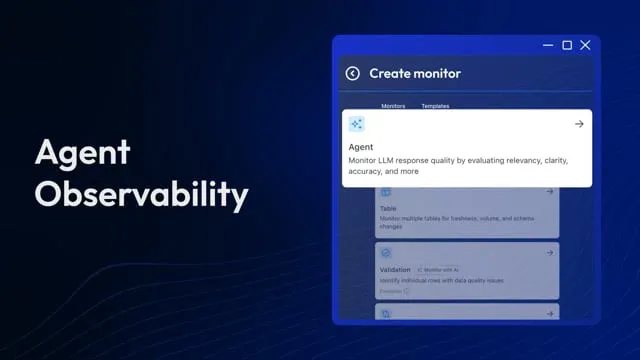
Feature Comparison
| Feature | Metaplane | Monte Carlo |
|---|---|---|
| Monitoring & Detection | ||
| ML-Based Anomaly Detection | Deploys self-adjusting ML monitors that account for seasonality and trends; users provide feedback to tune model tolerance | Ships automatic baseline coverage for freshness, volume, and schema; AI-powered monitoring agents accept natural language prompts to create monitors |
| Custom SQL Monitors | Supports custom SQL monitors with limits per tier: 3 on Free, 5 on Pro, 10 on Enterprise; includes partition and rolling window monitors on paid tiers | Provides SQL-based monitor creation alongside a codeless UI and AI-powered programmatic creation; no published per-tier SQL monitor caps |
| Schema Change Detection | Ships a standalone schema change tracker that notifies when databases, schemas, tables, or columns change across all tables including unmonitored ones | Includes schema monitoring as part of automatic baseline coverage; changes surface in the lineage graph and trigger incident workflows |
| Lineage & Impact Analysis | ||
| Column-Level Lineage | Auto-generates column-level lineage from metadata connecting sources to BI tools with no manual configuration required | Provides visual column-level lineage tracking across the entire data and AI ecosystem including warehouse, ETL, and BI layers |
| Impact Analysis | Data CI/CD forecasts which downstream tables and dashboards will be affected by code changes via the GitHub App integration | Dedicated impact analysis feature assesses downstream effects on systems and business processes; enriched lineage data makes alerts actionable |
| Usage Analytics | Data insights module shows how data is used, by whom, where, and how frequently to reduce data debt and prioritize queries | Surfaces dependency and usage information through lineage; focuses on identifying critical objects and pipeline bottlenecks rather than standalone usage dashboards |
| Alerting & Incident Management | ||
| Alert Routing | Routes alerts to Slack, Email, and MS Teams on Free tier; adds PagerDuty on Pro; Enterprise adds API and webhook destinations | Provides granular routing with automated lineage grouping and root-cause insights; supports Slack, Email, PagerDuty, webhooks, and API on higher tiers |
| Incident Management | Groups monitors, objects, and incidents into custom dashboards; incident and monitor audit history provides context to accelerate triage | Integrates incident management with root cause analysis agents; customers report reducing incidents by 90% year-over-year through automated triage workflows |
| Root Cause Analysis | Combines column-level lineage with incident audit history so teams can trace issues from BI dashboards back to source tables | Dedicated root cause analysis feature with AI-powered agents that explain why data and AI breaks happen, identify who needs to know, and suggest resolution steps |
| Integrations & Deployment | ||
| Warehouse Integrations | Connects to Snowflake, BigQuery, Redshift, ClickHouse, Postgres, MySQL, SQL Server, and Databricks; offers a Snowflake native app that runs using existing Snowflake credits | Start tier covers major warehouses and BI tools; Scale tier adds Databricks, Hive, Glue, Azure Data Lake, MySQL, Postgres, SQL Server; Enterprise adds Oracle, SAP HANA, Teradata, Microsoft Fabric |
| dbt Integration | Ships free standalone dbt Alerting tool for Slack and MS Teams plus open-source dbt Inspector for CI/CD; supports both dbt Core and Cloud | Monitors dbt models as part of the broader data pipeline; integrates with CI/CD workflows through YAML-based configurations alongside UI and API options |
| AI and Agent Observability | Does not offer dedicated AI or agent observability features; focuses on data quality monitoring for structured data pipelines | All tiers include Agent Observability and ML Observability; monitors AI inputs and outputs from source to agent with support for Langchain, Snowflake Intelligence, and Databricks Genie |
| Security & Administration | ||
| Compliance Certifications | SOC 2 Type II certified with GDPR, CCPA, and HIPAA compliance across all tiers; read-only metadata access ensures no PII storage | Advanced security features available on Scale tier and above including SSO, SCIM, self-hosted storage, PII filtering, and audit logging |
| User Management | Free tier supports 1 user; Pro supports 5 users; Enterprise provides unlimited users with customizable roles and permissions | Start tier supports up to 10 users; Scale and Enterprise tiers provide unlimited users with SSO and SCIM provisioning |
| Deployment Options | SaaS platform with a Snowflake native app option where data never leaves the warehouse; uses existing Snowflake credits for billing | SaaS platform with self-hosted storage option available on Scale tier and above; supports multi-workspace environments on Enterprise tier |
Monitoring & Detection
ML-Based Anomaly Detection
Custom SQL Monitors
Schema Change Detection
Lineage & Impact Analysis
Column-Level Lineage
Impact Analysis
Usage Analytics
Alerting & Incident Management
Alert Routing
Incident Management
Root Cause Analysis
Integrations & Deployment
Warehouse Integrations
dbt Integration
AI and Agent Observability
Security & Administration
Compliance Certifications
User Management
Deployment Options
Which to choose
Metaplane and Monte Carlo both deliver strong data observability capabilities but target different segments of the market. Metaplane provides an accessible entry point with its free tier and usage-based pricing, making it practical for small-to-mid-size data teams that need core monitoring, lineage, and CI/CD integration without a large upfront commitment. Monte Carlo positions itself as the enterprise-grade platform with broader scope including AI and agent observability, deeper incident management workflows, and tiered infrastructure that scales to organizations running thousands of monitors across complex data ecosystems.
Best-fit scenarios
Choose Metaplane if:
We recommend Metaplane for data teams that want to start monitoring quickly without navigating enterprise sales cycles. Its free tier provides 10 monitored tables, column-level lineage, and ML-based anomaly detection at no cost, which makes it practical for teams evaluating data observability for the first time. The usage-based Pro tier scales costs with actual consumption rather than requiring a large upfront commitment. Teams that rely heavily on dbt workflows benefit from Metaplane's free standalone dbt Alerting and open-source dbt Inspector tools. The Snowflake native app option is particularly valuable for organizations that want to keep data processing inside their warehouse and pay with existing Snowflake credits rather than adding another vendor contract.
Choose Monte Carlo if:
We recommend Monte Carlo for enterprise data teams operating at scale across complex, multi-domain data ecosystems. Its credit-based consumption model and four-tier structure accommodate organizations that need unlimited users, advanced security with SSO and SCIM, and up to 100,000 API calls per day. Monte Carlo stands apart with its AI and agent observability capabilities, which monitor AI inputs and outputs from source to agent across platforms like Langchain and Databricks Genie. The platform's agentic monitoring approach lets team members create monitors through natural language prompts, reducing the engineering hours spent on coverage strategy. Enterprise customers like Nasdaq, JetBlue, and Axios validate Monte Carlo's ability to handle mission-critical data reliability at scale.
These scenarios reflect the available product evidence. Your requirements, existing stack, and team expertise should guide the final decision.
Frequently Asked Questions
How do Metaplane and Monte Carlo differ in their pricing approaches?
Metaplane uses a freemium model with a free tier that includes 10 monitored tables, 1 user, and 3 custom SQL monitors at $0. The Pro tier operates on usage-based billing where teams pay only for the tables they monitor, and Enterprise provides custom annual contracts. Monte Carlo uses a credit-based consumption model where organizations buy credits and consume them based on published consumption rates. Monte Carlo offers four tiers (Start, Scale, Enterprise, Business Critical) but does not publish dollar amounts publicly, requiring a demo request to obtain pricing. The Start tier allows up to 1,000 monitors and 10 users, while Scale and above provide unlimited users. This means Metaplane provides a more transparent and accessible entry point, while Monte Carlo's pricing structure accommodates large-scale enterprise deployments with negotiated rates.
Can both platforms handle AI and machine learning observability?
Monte Carlo includes AI observability, ML observability, and agent observability across all its tiers. This means teams can monitor AI inputs and outputs from source to agent, trace agent behavior in production, and integrate with platforms like Langchain, Snowflake Intelligence, and Databricks Genie. Monte Carlo positions this as a core differentiator for organizations deploying enterprise AI agents. Metaplane does not currently offer dedicated AI or agent observability features. Its ML capabilities focus on powering the data quality monitoring itself, using machine learning to detect anomalies, adjust thresholds, and suggest which monitors to deploy. Organizations that need to monitor AI agent reliability in production alongside their data pipelines will find Monte Carlo provides that unified view, while Metaplane focuses specifically on data quality monitoring for structured data warehouses and BI layers.
What integrations does each platform support for data warehouses and BI tools?
Metaplane connects to Snowflake, BigQuery, Redshift, ClickHouse, Postgres, MySQL, SQL Server, and Databricks across all tiers. It integrates with BI tools including Looker, Tableau, Metabase, Mode, Sigma, and PowerBI. Metaplane also offers a Snowflake native app that runs observability directly inside the Snowflake environment using existing Snowflake credits. For transformation layers, it supports dbt with free standalone alerting and inspection tools. Monte Carlo organizes its integrations by tier. The Start tier covers major data warehouses and BI tools. The Scale tier adds Databricks, Hive, Glue, Azure Data Lake, MySQL, Postgres, and SQL Server. The Enterprise tier extends to Oracle, SAP HANA, Teradata, Microsoft Fabric, ServiceNow, data catalogs, and fully customizable bring-your-own integrations. Monte Carlo also integrates with Salesforce and Data Cloud for monitoring at the source.
How does setup and time to value compare between the two platforms?
Metaplane advertises a 15-minute setup process where teams connect their data stack and configure monitors without writing code. After the initial setup, ML models train on the data profile and begin delivering alerts within 3 days. The platform uses suggested monitors to recommend which tables to monitor, reducing the configuration burden on data teams. Metaplane's free tier lets teams start immediately without a procurement process. Monte Carlo promotes connecting in seconds with out-of-the-box monitoring that automatically scales with the environment. It provides automatic baseline coverage for common issues like freshness, volume, and schema, which means teams see value before configuring custom monitors. Monte Carlo's monitoring agent accepts natural language prompts to discover and deploy appropriate monitors in minutes. For enterprise deployments, Monte Carlo offers expert-guided onboarding on Scale and Enterprise tiers with support SLAs ranging from 24 hours to 4 hours depending on the tier.