Buying snapshot
Scroll sideways to see all columns. With a keyboard, focus this table and use the arrow keys.
| Decision point | What Databricks states |
|---|---|
Clouds | Runs across AWS, Azure and Google Cloud. Microsoft sets and bills Azure Databricks pricing. Release notes also cover Databricks on AWS GovCloud. |
Compute model | Serverless compute runs workloads without infrastructure setup; administrators can also configure compute clusters as SQL warehouses. |
Languages | Notebooks support SQL, Python, R and Scala. |
Developer tooling | Databricks Connect for IDEs and custom apps; CLIs, SDKs, SQL connectors and drivers; Declarative Automation Bundles for infrastructure as code; Git folders; Jobs for scheduling. |
Runtimes and releases | Latest runtimes are 19 and the LTS versions 18, 17.3, 16.4 and 15.4, each with an ML variant. Release notes are also published as an RSS feed, currently only in English. |
Support | Databricks offers technical support; contact sales for terms. |
Our take
Choose Databricks when data engineering, SQL analytics, machine learning and model serving should work on the same data under one governance layer, on the cloud you already use. If you only need a SQL warehouse or dashboards, weigh a broad, usage-billed platform against that narrower job, and measure cost in a proof of concept, as Databricks itself recommends.
Evaluate Databricks
Popular comparisons
See 20 Databricks comparisons
Where it stands out
One path from raw files to served features. Auto Loader loads new files from cloud storage incrementally, Lakeflow pipelines manage dataset dependencies and scale production infrastructure, Structured Streaming handles incremental changes, and Feature Store publishes feature tables to online stores for real-time serving.
Custom, hosted and external models behind one API. Model Serving deploys MLflow models and agents, Databricks-hosted models such as Meta Llama (pay-per-token or provisioned throughput) and external models such as OpenAI's GPT-4, each as an autoscaling REST endpoint. AI Gateway sets permissions and usage limits across them. Databricks says serving can support over 25K queries per second with under 50 ms of overhead latency, and asks high-QPS users to have their account team enable high scalability.
Governance for data and AI in one layer. Unity Catalog manages access through ACLs in the UI or SQL, metric views define KPIs once for people and AI tools, Data Classification tags sensitive data, and managed OpenSharing shares data externally. Unity Gateway governs AI cost, security and access across models, MCP servers and agents.
Transactional apps beside analytics. Lakebase is fully managed Postgres in Databricks-managed storage. Databricks says it syncs transactional data to analytics and AI without custom ETL pipelines.
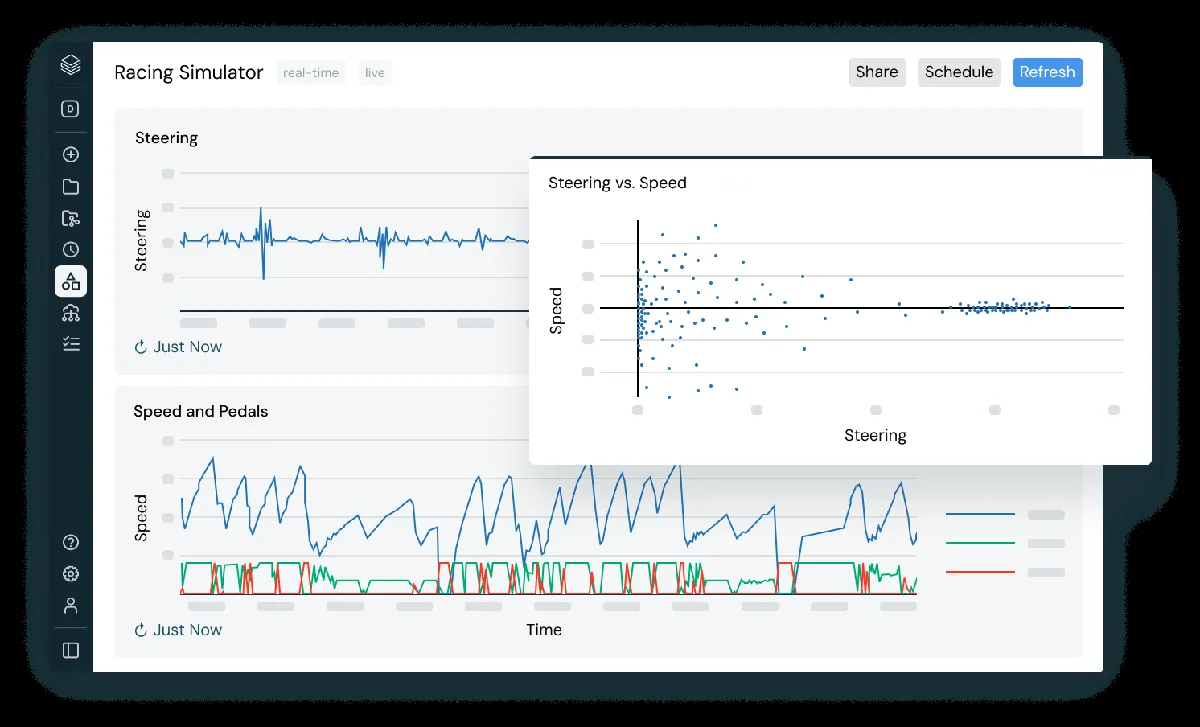
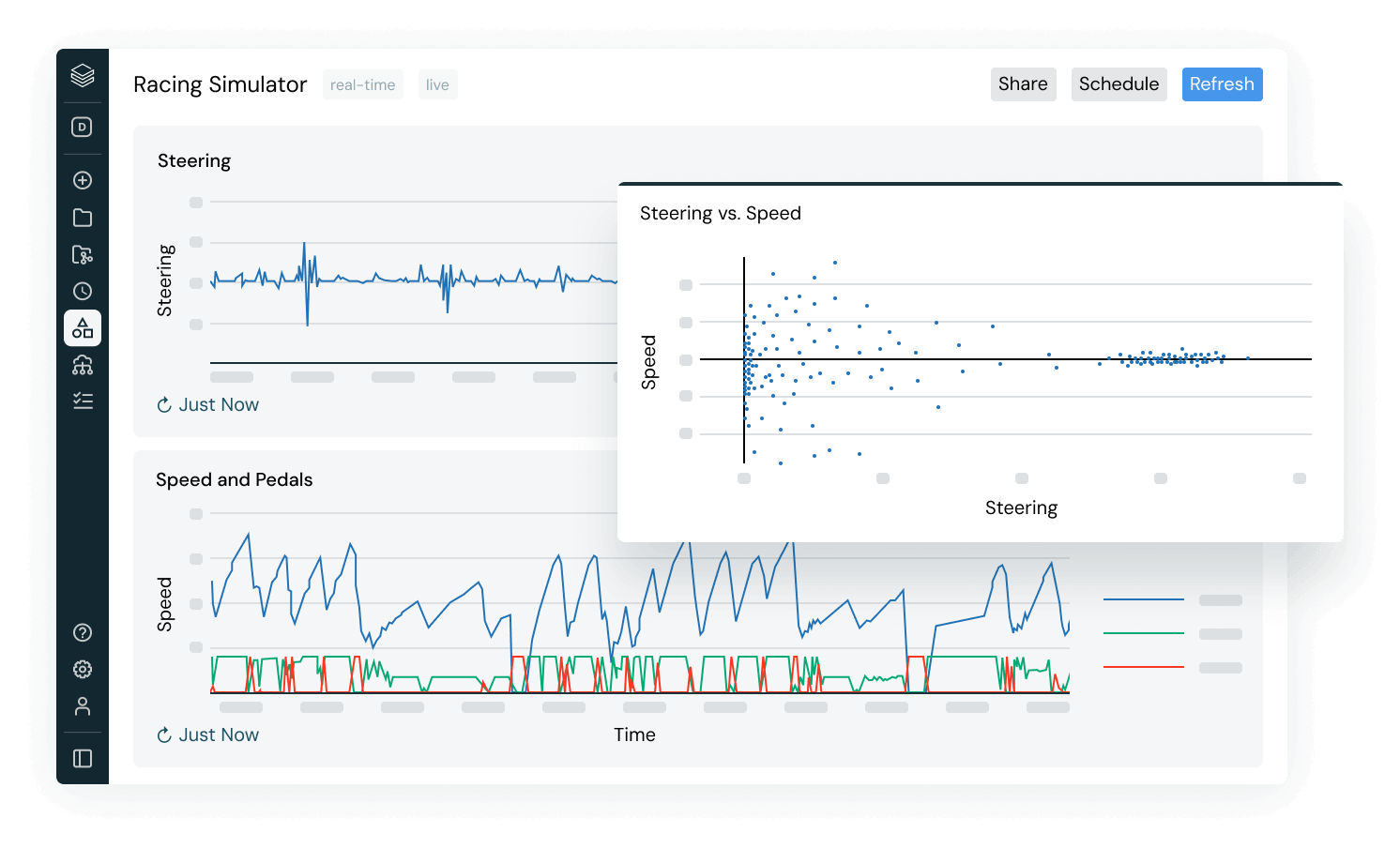
Product screenshot
Trade-offs to weigh
Free Edition is for learning, not production pilots. It is for non-commercial use, outside the support policy and SLA. Exceeding its quota shuts compute down for the rest of the day, or in extreme cases the month, though data is kept. It allows one 2X-Small SQL warehouse and five concurrent job tasks, with no GPU serving endpoints, no R or Scala, and no SSO or SCIM; LinkedIn verification raises some limits. The full platform needs a new account through the free trial.
Served models do not get patched in place. Model Serving does not apply security patches to existing model images; only a new image built from a new model version contains them. Plan regular model-version rebuilds.
Pricing and plan conditions
Databricks bills compute by usage, measured in Databricks Units (DBUs). DBU consumption depends on processing metrics such as compute resources used and data processed; storage use across several products is measured in Databricks Storage Units (DSUs). The Price List for each cloud shows each SKU's undiscounted list price; SKUs marked promotional are temporarily discounted. Prices vary by region and cloud provider, and storage, networking and related costs depend on the services and provider. Even during a free trial, if Databricks uses your own cloud account, your provider charges for resources such as compute instances.
Scroll sideways to see all columns. With a keyboard, focus this table and use the arrow keys.
| Option | Cost basis | Conditions |
|---|---|---|
Free Edition | No cost | For students, educators, hobbyists and anyone learning, in a serverless-only, quota-limited workspace. It replaced Community Edition, retired in 2025. |
Free trial | Free platform access; colleagues can be invited; some trials include credits | Databricks sets credit eligibility, amount and expiry after sign-up. The trial ends when credits run out; you are then subscribed to the plan you used and may need a payment method. |
Pay as you go | Per-second usage at Price List rates, no up-front costs | Outside Azure, the card on file is billed monthly, sometimes more often. Cancel any time; usage up to termination is charged in full. |
Committed Use Contract | Discounts and other benefits for committed usage | Larger commitments bring greater benefits and can be used across clouds. Contact Databricks, also for invoice billing or an annual plan. |
Public signals
About these signals
Verified factual signals from public sources. They indicate observable activity or interest, not total adoption, product quality, or cost.
1.4k GitHub commits 90d44.2k GitHub stars0 vulnerabilities across 2 packagesOpenSSF score 5.6/10
See all signals from 9 sources
npm · @databricks/sql@2.2.0 · PyPI · databricks-sdk@0.154.0